 |

|
|
As quantum computers advance, UMD researchers and industry experts explore how to protect edge devices from a new generation of security threats. |
|
On Tuesday, July 14, the University of Maryland held the Security of Edge Devices in the Post Quantum Era workshop, bringing together experts from academia, government, and industry to address a growing concern in computing security: how to protect edge devices as quantum computing becomes a practical reality.
As quantum computers advance, they pose a direct threat to the cryptographic standards that edge devices rely on today. The National Institute of Standards and Technology (NIST) is already transitioning away from traditional, quantum-vulnerable cryptography toward quantum-secure standards known as post-quantum cryptography (PQC). This shift signals a broader industry reckoning: systems that are secure today may not remain secure once quantum-capable adversaries enter the picture.
The workshop's purpose was to build awareness of the need for quantum-grade security in edge computing systems. Edge devices face a complex mix of attack surfaces, physical, cyber, and combinations of both, and in the post-quantum era, security solutions must be designed to withstand attackers with access to quantum computing power. Complicating matters further, edge devices operate under tight physical constraints, including limits on size, weight, and power, which makes designing effective security solutions especially challenging.
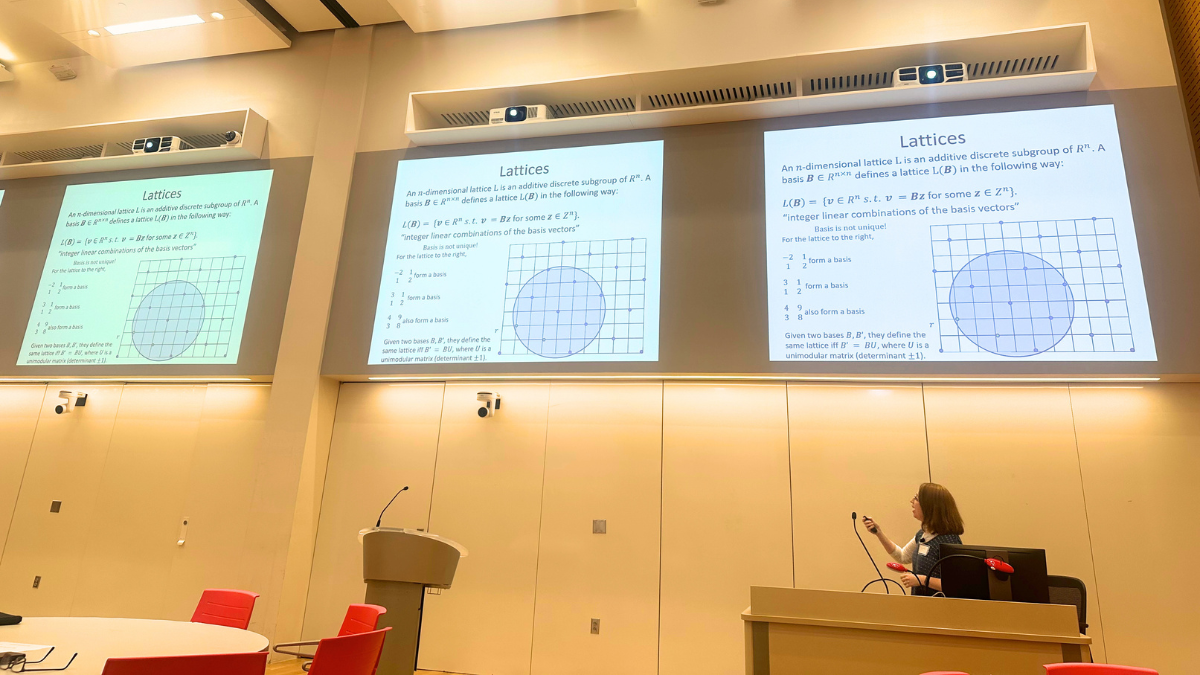
Throughout the day, speakers explored both the risks and the opportunities of this new landscape. Sessions covered the foundations of quantum algorithms, an introduction to post-quantum cryptography, physical security and side-channel threats in the quantum era, and the real-world overheads of implementing edge computing solutions. Presenters included Yi-Kai Liu of NIST, Dana Dachman-Soled of UMD's Department of Electrical and Computer Engineering, Jakub Szefer of Northwestern University, and Isidoros Doxas of Northrop Grumman.
The event was organized by Isaac McDaniel and Ankur Srivastava of the University of Maryland, Louise Sengupta of Northrop Grumman, Wayne Churaman of the Army Research Lab, and Jonathan Heiner of the Air Force Research Lab.
"It was an honor to organize this workshop meant to create a community of edge computing designers and users who are also aware of new advances in quantum computing," said Ankur Srivastava, Director of the Semiconductor Initiative and Innovation and joint appointee with ISR and the Department of Electrical and Computer Engineering. "The challenges and opportunities posed by quantum computing to edge security are substantial. This workshop will help lay the foundation for the significant mathematical and engineering advances needed to support future edge security needs."
As the quantum era draws closer, workshops like this one mark an important step in preparing the edge computing community, and the broader security field, for what comes next.
Related Articles:
Graham Named Honorary ASME Member
Smooth Sailing: MATRIX Dives Into Ship Inspecting
UMD Joins NSF's $400M AI Nanofabrication Initiative
New Speech Model Reads Mouth Movement Across Languages
New Graduate Program Teaches Real-World Autonomy Skills
Grand Challenges 2.0: Engineers Partner to Unlock Solutions
Aircraft May Refuel Themselves - With Help From AI
Dean Graham Reappointed to Second Five-Year Term
Babadi, Dachman-Soled and Dumitras Receive Academic Promotions
Generations of Graduates: A Full-Circle Celebration
July 24, 2026
|




