 |
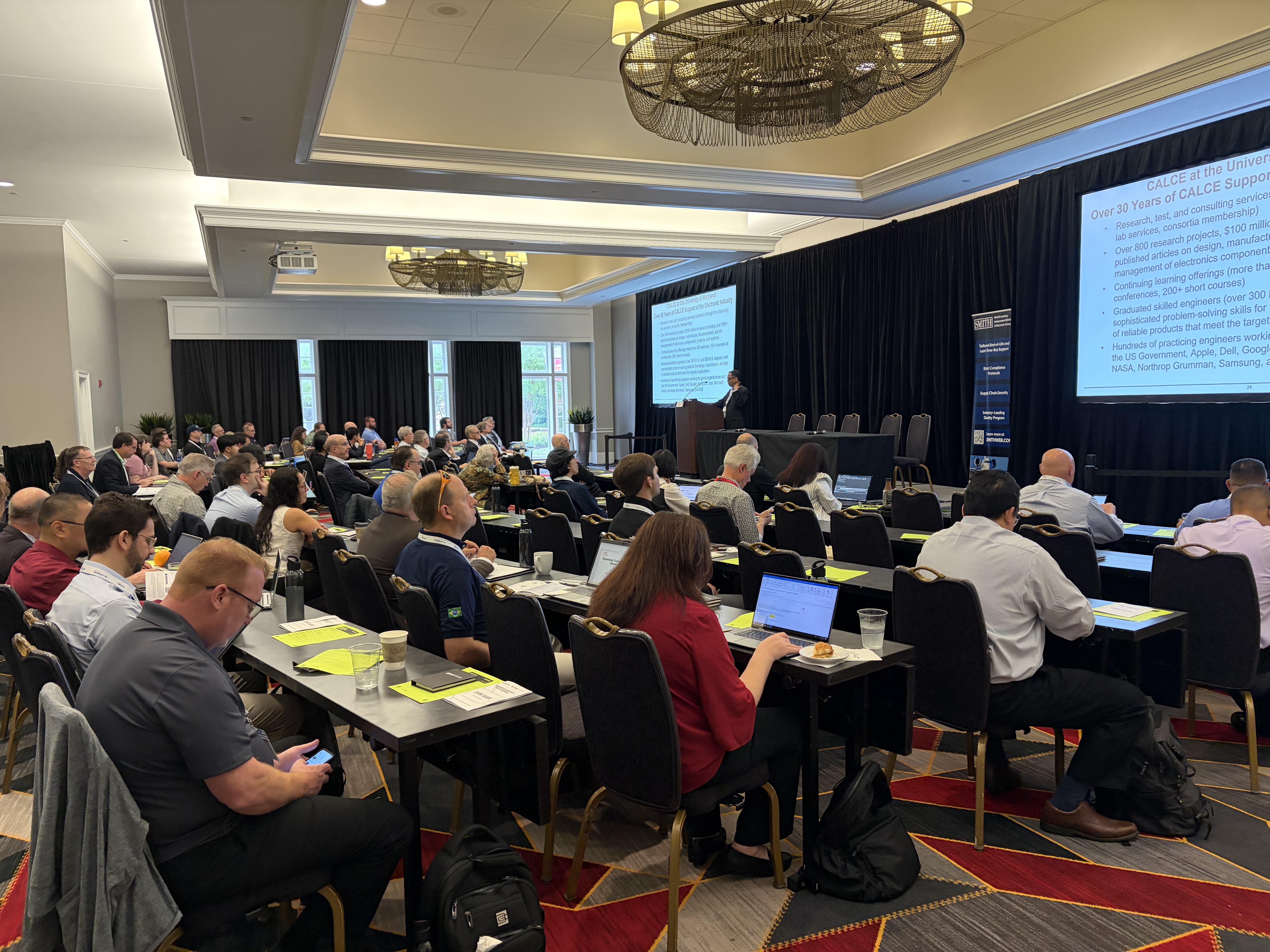
The Center for Advanced Life Cycle Engineering (CALCE) at the University of Maryland hosted the 2026 Counterfeit Parts and Materials Symposium from June 23-25 in collaboration with SMTA. Marking twenty years of the SMTA/CALCE Symposium, this year's event brought together experts from government, industry, academia, standards organizations, laboratories, and the electronics supply chain to discuss counterfeit avoidance, supply chain security, standards implementation, and emerging detection technologies.
The Symposium opened with remarks from Tanya Martin, Executive Director of SMTA, followed by Dr. Diganta Das of the University of Maryland, who reflected on "Twenty Years of Securing Supply Chain SMTA/CALCE Symposium." The opening session also featured Dr. Ankur Srivastava's keynote, "Investing in a Robust Semiconductor Ecosystem: The UMD Story," and Richard Smith's presentation on "'The Numbers Crunch' Counterfeit Reporting Trends 2025," grounding the program in both the history of the Symposium and current counterfeit reporting trends.
This year's technical program featured eight thematic sessions covering policy and data, trusted sources, technology tools for avoidance, standards, standards implementation, detection cases, laboratory practices, distribution, and closing reflections. Presentations examined trusted microelectronics, design for sourcing, AI for provenance and traceability, AI-enhanced physical inspection, inkjet-printed silicon nanoparticle ink for anti-counterfeiting, aerospace anti-counterfeit standards, SAE AS6171 updates, advanced detection techniques, and the SAE online tool for AS6171 test-set selection.
Several talks focused on practical implementation and real-world detection challenges. Speakers discussed standards for non-EEE materiel, improved analysis enabled by standards, unified counterfeit mitigation strategies, NASA's EEEE parts selection process, X-ray and discharge testing of commercial AA and AAA batteries, DDR/GDDR integration testing and data-driven diagnosis, the hidden price tag of counterfeit electronics, and counterfeit risk assessment when evidence diverges. Together, these sessions emphasized that counterfeit avoidance requires not only technical testing but also traceability, documentation, risk analysis, and evidence-based decision-making.
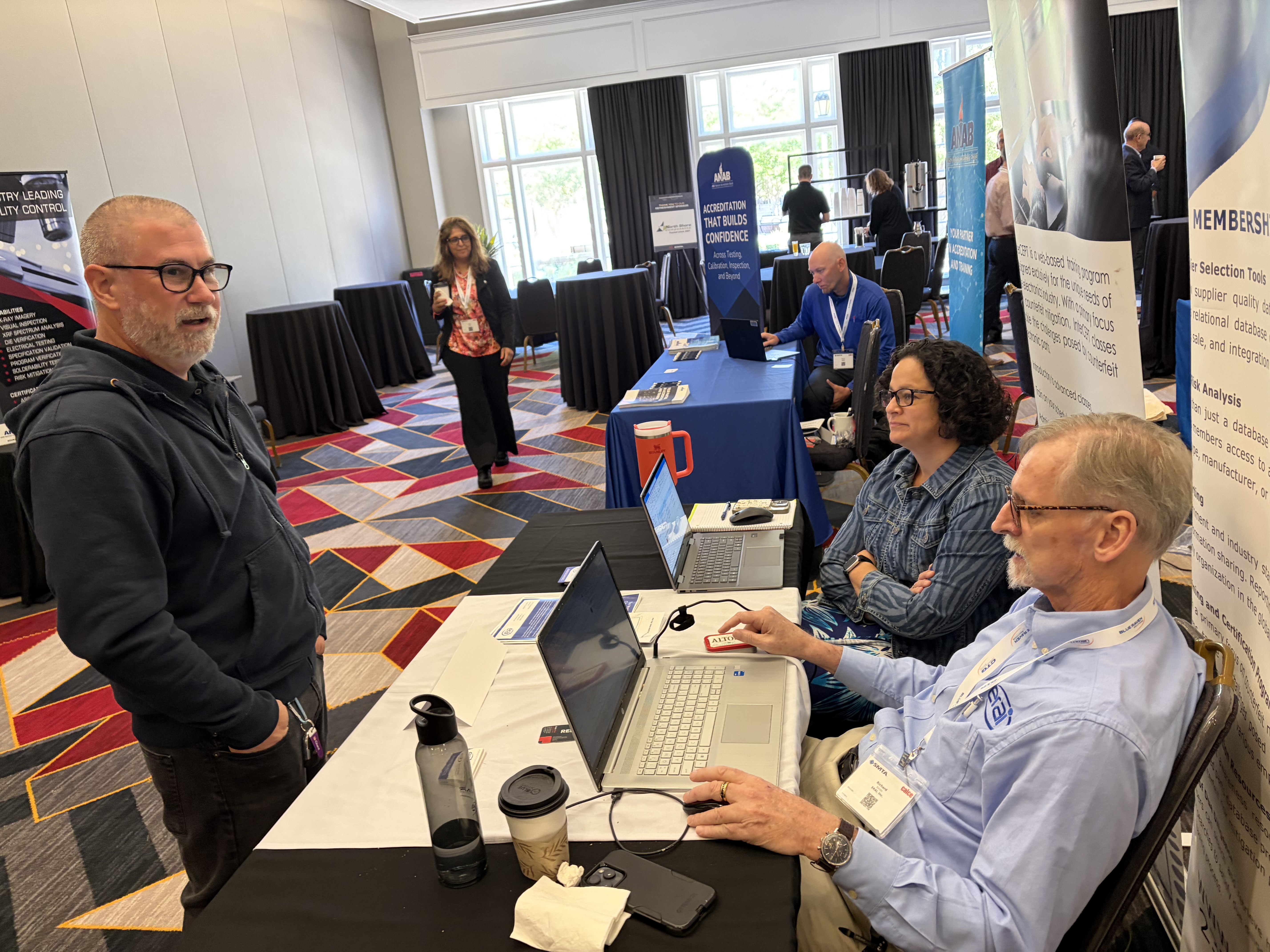
The Symposium also included two panel discussions. A panel on implementation of standards and laboratories brought together experts from Lilani Consulting Group, SMT Corp., Micross, and CALCE. A second panel, "The Return to an Era of Allocation of Components and Long Lead Times," moderated by Kevin Sink of TTI, featured panelists from Avnet, Yageo Kemet, and TTI. The technical program concluded with learnings from this year's event, presented by members of the Technical Committee.
On June 25, CALCE faculty members offered three professional development courses: "Electronic Part Obsolescence Forecasting, Mitigation, and Management," taught by Prof. Peter Sandborn; "Understanding and Implementing Industry Standards for Counterfeit Avoidance," taught by Dr. Diganta Das; and "Counterfeit Parts Detection Using SAE AS6171: Impact of the 2026 Updates," taught by Dr. Michael Azarian.
A key theme throughout the 2026 Symposium was that counterfeit avoidance depends on a coordinated ecosystem of trusted sourcing, standards, laboratory capability, advanced detection methods, and collaboration across industry, government, academia, and standards organizations. CALCE thanks SMTA for its continued partnership and appreciates all speakers, moderators, panelists, sponsors, attendees, and Technical Committee members for their contributions to this year's Symposium's success.
For more information on the technical program, professional development courses, or CALCE research on counterfeit avoidance, please contact Dr. Diganta Das at diganta@umd.edu.
July 10, 2026
|




